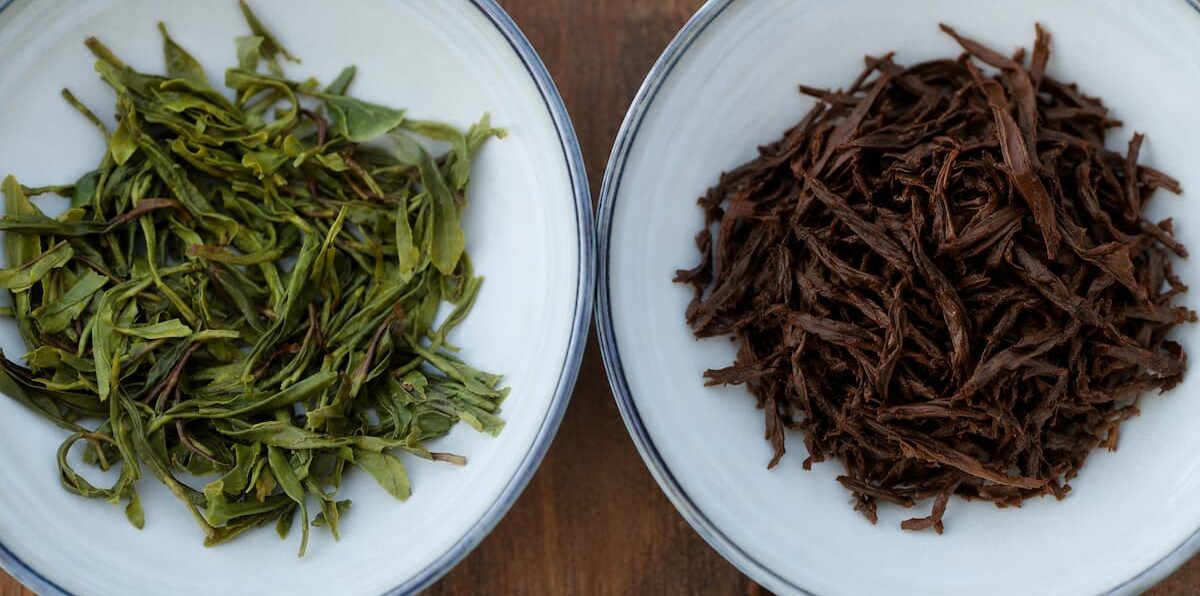
The many different types of tea often raise questions: why is a tea called “black” or “green”? In this article, we explain precisely the difference between green tea and black tea, the two most widely consumed teas in the world.
One Plant, Two Teas with Opposite Flavors
As tea growers, when we welcome visitors to our plantation in Brittany, we’re often asked whether we grow green tea or black tea. Yet tea, regardless of its color, comes from one and the same plant: Camellia sinensis.
So where does this striking difference in flavor come from—vegetal for one, woody/fruity for the other—without a single artificial flavoring added? The answer lies right after harvesting, in how the leaves are processed.
Green Tea: Fixation, the Secret to a Fresh, Vegetal Flavor
For green tea, the goal is to preserve the leaf’s fresh, vegetal flavor as much as possible, which means preventing any oxidation. To achieve this, freshly picked leaves go through a step called fixation—shaqing in Chinese—where they’re heated to a high temperature right after harvest.
This heating inhibits enzymes present in the fresh leaf that drive oxidation: these enzymes become inactive once heated to around 70°C (158°F). It also preserves the catechins and chlorophyll found in the fresh leaf, and with them, the leaves’ vegetal freshness (compounds credited with much of green tea’s health benefits). It’s the same reaction that occurs when you blanch green vegetables: spinach quickly steamed, for example, keeps its green color.
The Two Traditional Fixation Methods
- The Chinese method: the leaves are pan-fired in a wok for about 5 minutes.
- The Japanese method: the leaves are steamed for about one minute.
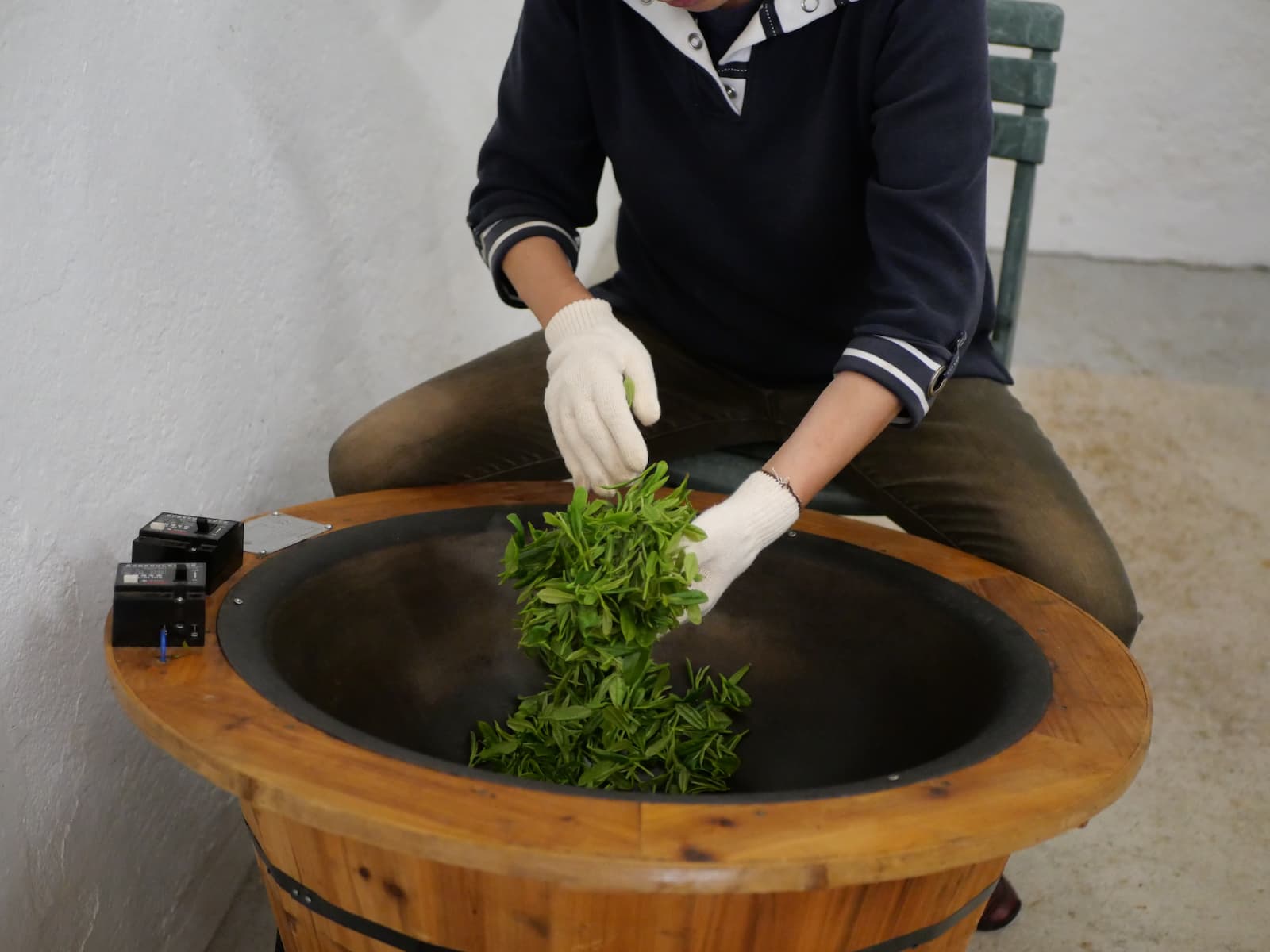
Innovative Green Tea Fixation Techniques
Some tea growers are experimenting with new ways to fix their fresh leaves, notably using microwaves, which distribute heat quickly and efficiently through the leaves. Others are also testing rapid flash-freezing of fresh leaves: cold, too, helps preserve catechins and chlorophyll. To date, however, these innovative methods remain uncommon.
Black Tea: Oxidation, the Source of Bold, Intense Flavors
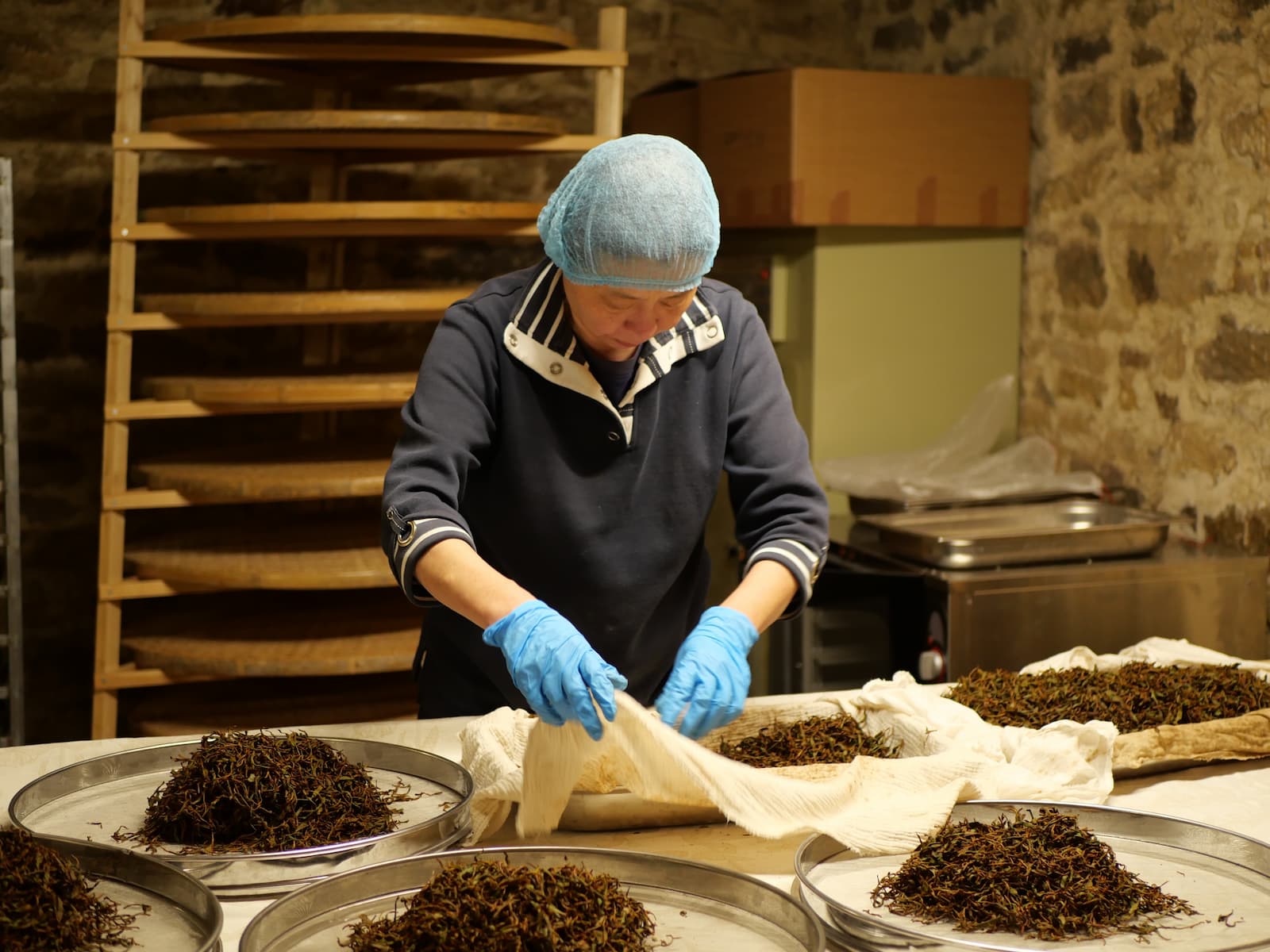
For black tea, the approach is reversed: the goal is to develop flavors that move away from vegetal freshness. After harvesting, unlike with green tea, there’s no attempt to preserve catechins and chlorophyll. Instead, the leaves are left to wither, and their oxidation is then encouraged.
What Is Tea Oxidation?
Oxidation is a natural phenomenon caused by oxygen in the air combining with certain molecules present in plants: for example, when you bite into an apple and leave it out for several hours, it turns brown—it oxidizes. While oxidation is something we usually try to avoid with most foods, it’s actually encouraged and carefully controlled for black tea